

Ghana’s government mistakes the theater of reform for the substance of industrialization.
The government of Ghana has assumed a brand-new character—an ambitious one—almost overnight: it now vows to build industrial parks and export-processing zones (EPZs), crowned with a 24-hour economy. In July 2025, it turned this new leaf, abandoning its former flagship policy, One-District-One-Factory (1D1F), which aimed to establish at least one factory in each district.
For an institution that has repeatedly undergone structural transformations—each more cosmetic than the last—it is difficult to discern the true intent of its latest metamorphosis. From one reform to another, from one color to a worse shade, Ghana’s bureaucracy continues its chameleon act. Yet unlike the chameleon, which changes for reasons of survival, signaling, or courtship, the government of Ghana seems to change simply for the sake of deception.
This is, after all, an institution that has fattened itself on galamsey and raw-material exports. At first, its motives appear unclear; on second thought, they become painfully obvious. The government intends, as always, to do nothing but laze about while disguising the theft of indigenous lands as the noble pursuit of “industrialization.”
From the outset, the plans for the Tema Export Processing Zone, the Greater Kumasi Industrial City Project, and the Builsa Agro-Processing Park make their real intent transparent: to confiscate over 40,000 acres of land from real families in exchange for a theoretical promise of 60,000 jobs—jobs that supposedly will help Ghana pivot from raw-material exports to value-added production, thereby boosting exports and foreign exchange.
Mind you, this same government has been throwing millions of U.S. dollars at the Cedi to keep it artificially low—boosting imports while making exports even more expensive and uncompetitive. The irony is not lost on anyone, least of all the Ghanaian politician and the Mahama administration.
What, then, is the record that suggests this government can turn anything it touches into gold? Galamsey? Untarred roads? Open, fetid gutters? Crumbling infrastructure? A shortage of skilled labor? A tiny domestic market? Or perhaps its glaringly uncompetitive manufacturing base? Operating a 24-hour economy requires reliable power, logistics, transportation, and regulatory consistency—none of which the government has managed to provide.
Consider this: Ghana’s largest teaching hospital, Korle Bu, can scarcely provide functioning incubators for sickly newborns. Pregnant women die daily on the dilapidated Nanumba feeder roads of the north. Entire boats carrying women and children—some returning from school—still capsize and drown in the Volta Lake.
These are not isolated tragedies; they are daily realities, woven into the national routine. And yet, this same government would have Ghanaians believe in industrial parks, export-processing zones, and a 24-hour economy.
Meanwhile, the people need paved roads, not cheap tractor paths. They need real drainage systems, not open gutters. They need affordable, uninterrupted electricity—by now, powered by nuclear energy. They need a basic public-health infrastructure: accessible restrooms with soap, community gyms and stadiums—not abandoned bushes for open defecation, and certainly not another round of mass “free” foreign vaccinations. They need bus stations, not broken sheds; sidewalks, not makeshift street shops; botanical gardens and playgrounds, not industrial parks. They need 24-hour public libraries, not a 24-hour economy.
Some clever technocrat will smirk and ask, “Why can’t we walk and chew gum at the same time?” My answer: Ghana hasn’t learned to walk. Like a toddler, it has no business chewing gum.
At the most basic level, the government cannot deliver the elementary conditions of a decent society, let alone those required for an industrial park. It mistakes the form of industrialization—industrial parks, processing zones, and round-the-clock production—for the substance of it: creating deep manufacturing ecosystems, upgrading domestic technology, fostering local ownership, and integrating real value chains. Without the latter, Ghana risks entrenching its familiar pattern—raw-material dependence, low-value assembly, and external vulnerability.
The government’s strategy of leaning on foreign investors and export parks is not industrial policy; it is surrender. Through the Ghana Free Zones Authority, the state offers lavish incentives: unrestricted 100-percent ownership for any investor—foreign or domestic—along with “one-stop-shop” permits, zero corporate tax, and full exemptions on import duties for raw materials, machinery, and equipment.
Who are they kidding? Ghana’s industrial parks are poised to become foreign-owned export enclaves with minimal domestic linkages—imported inputs, foreign management, negligible technology transfer. The broader economy will remain untouched. And worse still, foreigners will own 100 percent of thousands of acres of indigenous land—tax-free, effort-free, and without firing a single shot. That is not a policy for progress; it is a policy for intergenerational suffering.



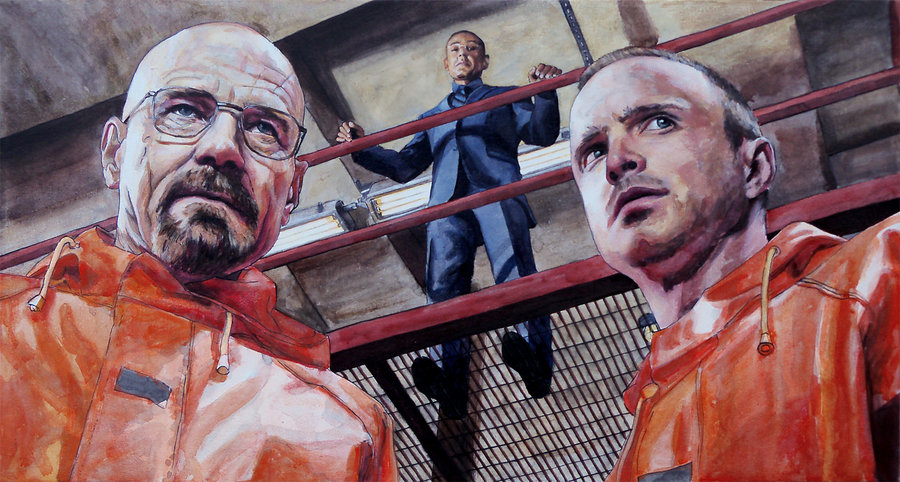


Does the picture capture Ghana’s finest?
Imagine that? This is the best this land can produce? It’s wild.
The pain-inflicting government.
I would be spreading lies if I said, in addition to the 24-hour pain they cause, that they were not Ghana’s undertakers.
Emmanuel K. Wow! Pain-inflicting government?
Prof. Botanical Gardens and playgrounds, not industrial parks?
I was following keenly but that part, 🤔
Abi, it can be both aaannnaaaa 🤔
You write, to be understood. Thank you for sharing this, Prof 💎🙏🏿👍🏿
Thanks for sharing this sentiment.
Narmer Amenuti Welcome Prof. It’s always a joy to read from you. And let me add, even if I don’t agree with you too 🙏🏿
On this particular one, I am educated as you do me always !!!
Very good read 👍
Henry Adjei Boadi Massa, you haven’t crawled but you want to go to the Olympics? What part of this can be likened to doing “both” of anything? Did you read this part, my retort to that idea?: “Some clever technocrat will smirk and ask, “Why can’t we walk and chew gum at the same time?” My answer: Ghana hasn’t learned to walk. Like a toddler, it has no business chewing gum.”
Henry Adjei Boadi we haven’t learnt to walk no need attempting to do ‘flashy things ‘ , our minds and basic health hasn’t developed yet
Narmer Amenuti not gotten to that part forgive me.
Maybe they don’t have to be mutually exclusive so permit me to side with the technocrats 🤔 🤷
We should expect nothing good from this company set up by foreigners we called Ghana, the systems we run is alien to our very nature.
The only result we will continue to get is servitude camouflaged as development.
We are only continuing the colonization without knowing, this time by ourselves.
Government is nothing but group of employees for the colonial system.
Our solutions should be homegrown in group economies.
“Government is nothing but group of employees for the colonial system. ” You can’t lie!
W’aka asɛm, but still yɛ hia industrialisation no.
so called industrialization that won’t be maintained
But will the things he is arguing for be maintained? You have exposed the weakness in your agrument.
You mean you cannot maintain a children’s park? Or a botanical garden? Or clean the filthy gutters in Accra alone, and construct proper drainage and sewage treatment facilities, but for some weird reason you can construct Industrial Parks? No. you can’t. They are lying. They are thieves!
I foresee another thing: Within a few years of construction, the project will stall and be abandoned. The no-restriction ownership of those lands will provide the foreign owners the legal right to turn these lands into building tiny, bumber to bumber, estate homes for sale at exorbitant prices to Ghanaians. This is the history of the way thinks work in Ghana.
Narmer, my Brother, you’ve really mastered the art of packing punches and landing them clean and hard. Clearly, I suspect, “pulling no punches” was coined with you in mind. 😉
LOL. “Clearly, I suspect, “pulling no punches” was coined with you in mind.”🤝Thank you! Plus, I appreciate your insights and academic challenges. They say: A man is only as good as his friends! With friends like yourself, such an old adage has never been more true!
“The government of Ghana has assumed a brand-new character—an ambitious one—almost overnight: it now vows to build industrial parks and export-processing zones (EPZs), crowned with a 24-hour economy. In July 2025, it turned this new leaf, abandoning its former flagship policy, One-District-One-Factory (1D1F), which aimed to establish at least one factory in each district”
As a Student of Straight and Crooked Thinking, l firmly believe that the premises on which you based your loquacious write-up is already flawed
You failed to appreciate the fact that though “government of Ghana” as you described may seem as just one entity or a continuum, but in reality the two things you put together as one were headed and heralded under different administrations with different ideologies.
To assume therefore that “government of Ghana” ran under one administration with different governance/development objectives is very flawed.
Remember the popular cliché “new king, new laws”
Secondly one a people vote a particular administration out, it means the people are never satisfied with the development objectives or pace of a particular administration
To create the impression that the government of Ghana says one thing at a period and pursues another at another period when it has not completed what it set out to do earlier is a fallacy.