

You grow up. You work hard. You fail at some things and succeed at others. You learn from certain mistakes and repeat others as if on instinct. You reflect on parts of your life while resolutely ignoring others. You love, and you hate. You make amends, and you harbor regrets. You are just a man. And in time, you accept it.
Eventually, you reach a certain point. You marry. You have children. Or you don’t. Your parents are either proud or uninterested. The village might celebrate you—or remain indifferent. Your friends may cheer you on—or quietly drift away. You’ve thought about these things more often than you’d admit. These are the thoughts you’ve carefully kept away from your own reflection.
And then, one day, you have money. Maybe you earned it. Maybe it fell into your lap. Or maybe, like a Ghanaian politician, you did both—labored for the title, then treated the state’s coffers like your personal reward. But I digress.
With money comes a peculiar kind of silence—room to breathe, space to look back. You think about the long journey: where you began, how you endured, and what it cost. The cost is high. Very high.
Now, you ride in a car. A modest one. Or a sleek one. Or maybe it’s a luxury V8—what we call a “big man’s car.” The plush seats, the whispering air-conditioning, all contrast sharply with memories of Trotro benches and the backseats of Okadas. You look out the window—driving or being driven—and the city unfolds before you. And then, inevitably, you see the women.
You see them from behind: wide hips, narrow waists, long legs, short ones, heads held high or slumped from fatigue. You see them from the front: faces adorned or bare, figures outlined in imported fabric stretched tight across their skin. Camel toes, curves, sharp angles. Youth. Possibility. Memory. You see what you once couldn’t bear to look at. What you once didn’t dare to desire.
And suddenly, the past returns.
You remember the girl. That girl. The one you liked. The one you couldn’t afford. The one who laughed with you, then vanished into an older man’s car, waving goodbye through the tinted glass. You heard later she called you a “small boy.” The truth is, you were! It hurt. You blame him. You blame her. You blame society. You blame the long road it took for you to become someone. And yet—what now, with these memories?
You think of your grandfather. You summon his story—part fact, part myth, part invention. You recall his wives. His mistresses. His many children. You check your bank balance. You could afford a mistress. Or two. Another wife, even. Or, if unmarried, a rotation of girlfriends. The math works. And after all, haven’t you been told since boyhood: men are born to multiply?
But something interrupts. A flicker of conscience, or clarity.
You remember Kofi’s proposal. To start a mechanic shop. Kofi—honest, skilled, stretched thin providing for his wife and children. He has friends who help on weekends, friends with dreams of families too. What if the shop could sustain all of you? What if the business became a seed—not just for your own future, but for theirs?
You pause.
What do I really want? You ask yourself.
To be like your grandfather?
To live like a man multiplying beyond meaning?
A wife and children—that’s a blessing. But many wives? Mistresses? Concubines? That’s another life altogether. One weighed down by appetite, shadowed by regret. Which life could sustain the dream of that shop? The choice, it seems, is clear.
But the pain lingers. The bitterness of being once left behind. Of being called small. The memory of that girl waving goodbye.
And still—you desire youth. Freshness. Softness. Why not?
So you call Kofi.
“Maybe next year,” you say.
You drive past the nursing school down the road. Or that polytechnic, or university, or teacher training college. You slow the car. You pick up your next wife. Or the mother of your next child. Or your next mistress. Or your next escape.
You have arrived. Or so you tell yourself.
And just like that, the cycle begins again.
Another young man will grow up like you.
He will try. He will fail. He will reflect and avoid and regret.
And he, too, will become just a man.
The average man.
And in time, like you—
He will accept it.



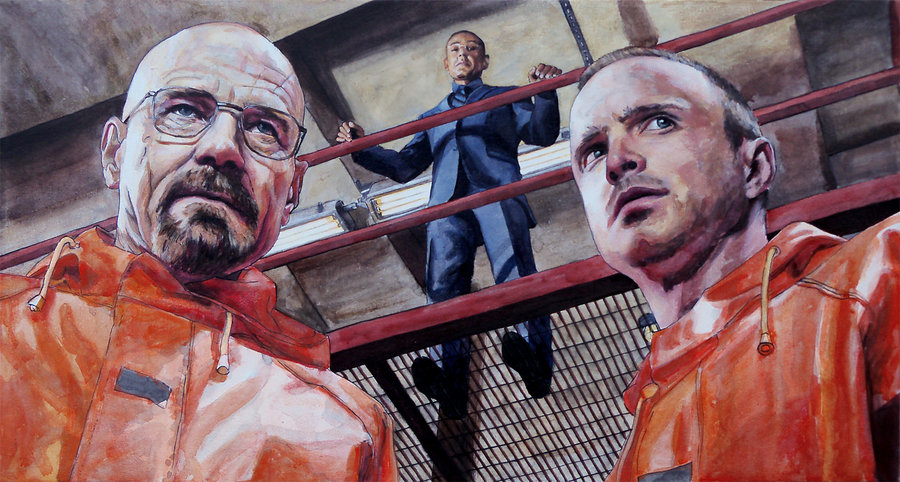


You paint quite literally the making of average men.
Or the unmaking of great men?
Ah! Some of us will become the Man we blamed. We will arrive (but only where he did). And the irony of it will slap us in the face knowing that another Young Man will grow up like us. That’s when the reality humiliates us.
This is good! Very poetic! Well done.
You have an uncanny ability with words. Are you even human?..lol
Delicious moi!